Tuesday, March 2, 2021

women's power sewing machine - VS Sewing Machine

 women's power sewing machine - VS Sewing Machine

A sewing machine is, obviously enough, "a machine that sews," but if you think about those words literally, it can help you figure out how it works. Let's say we had a big construction set with standard, snap-together, engineering components in it; which bits would we need to make a sewing machine? The answer is surprisingly few. https://codeshoppy.wixsite.com/embroiderysewing/post/sewing-machine-showroom-in-taramani-vs-sewing-machine

Although you can still find the odd hand-powered sewing machine (and you can operate any machine slowly by hand if you want to for slow, precision work), virtually all modern sewing machines are electric: they're built around quite hefty electric motors (roughly the same size as the ones you find in vacuum cleaners and lawn mowers). Pushing a tiny little needle up and down through multiple layers of thick fabric is hard work; and lifting and feeding the fabric takes effort as well. If you've ever sewn something like a pair of curtains, you'll know it can be quite exhausting turning and moving the fabric, but a sewing machine helps you do that job as well. https://mix.com/!BgpEQ93r:sewing-machine-showroom-in-taramani-vs-sewing-machine

The beating "heart" of a sewing machine is the electric motor, which is hidden inside the main stem of the machine usually quite near to the place where you plug in the power cord. The motor drives three separate mechanisms that are very carefully timed to cooperate with one another. Two of them, a mixture of cams and cranks, operate the feed dog, that little set of teeth that pop up and down just beneath the needle and the presser foot (which holds the material in place); one pushes upward against the material (to grip it) and the other moves it forward by an adjustable amount (to make stitches of varying length). It's actually a rather neat double-act: one of these mechanisms makes the feed dog go up and down, while the other slides it back and forth. Meanwhile, another crankshaft driven by the motor makes the needle rise up and down, while the fourth and final mechanism turns the shuttle and hook attached to it that makes the stitches. https://mix.com/!8uzZbLbV:sewing-machine-showroom-in-thoraipakkam-vs-sewing-machine
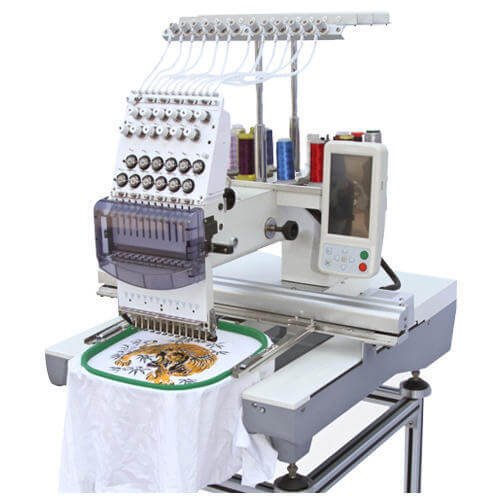
 

A sewing machine is a machine used to sew fabric and materials together with thread. Sewing machines were invented during the first Industrial Revolution to decrease the amount of manual sewing work performed in clothing companies. Since the invention of the first sewing machine, generally considered to have been the work of Elias Howe and Englishman Thomas Saint in 1790, the sewing machine has greatly improved the efficiency and productivity of the clothing industry. https://mix.com/!SekLGdH6:sewing-machine-showroom-in-chennai-branches-vs-sewing-machine

Home sewing machines are designed for one person to sew individual items while using a single stitch type at a time. In a modern sewing machine, the process of stitching has been automated so that the fabric easily glides in and out of the machine without the inconvenience of needles, thimbles and other tools used in hand sewing. Early sewing machines were powered by either constantly turning a handle or with a foot-operated treadle mechanism. Electrically-powered machines were later introduced. https://mix.com/!bEJiq-h0:sewing-machine-showroom-in-ashoknagar-vs-sewing-machine



Monitoring of Sewing Machine for Textile - VS Sewing Machine

 Monitoring of Sewing Machine for Textile - VS Sewing Machine

The smart factory is a futuristic production paradigm that transforms ICT(Information and communication technology) into a new smart/green/urban production system by integrating the existing traditional industrial production system.[1-2] Industry 4.0 proposed by DFKI, is defined as the 4th industrial revolution based on Internet-of-Things(IoT), cyber-physical systems(CPS), and Internet-of-Services(IoS). [3-6] In the textile industry, the smart factory is a factory based on the CPS that incorporates ICT and IoT technology into the existing production system.[7-8] In order to build a smart factory between textile and apparel streams, the connectivity of the CPS should be strengthened. https://www.plurk.com/p/o8lmso
 
A sewing machine is used to stitch the fabric and other pliable materials together with threads. Sewing machines were invented during the first Industrial Revolution to decrease the quantum of manual sewing done in garment industries. Since its invention, it has greatly improved the efficiency and productivity of the fabric, garment and needle industries. The different parts of a sewing machine and its functions help the Operator to know the functioning of a sewing machine. https://www.plurk.com/p/o8lmw3
 
There are different types of sewing machine used in the manufacturing of garments and other articles, but here in this Unit, we will study only single needle lock stitch machine.A sewing machine controls the fabric with feeding devices and forms a perfect stitch to join the fabrics. It has various parts and attachments, each of which have their own importance and use. There are mainly two categories of sewing machines that is, domestic sewing machine and industrial sewing machine.https://www.plurk.com/p/o8lmzd


A sewing machine is, obviously enough, "a machine that sews," but if you think about those words literally, it can help you figure out how it works. Let's say we had a big construction set with standard, snap-together, engineering components in it; which bits would we need to make a sewing machine? The answer is surprisingly few. https://codeshoppy.wixsite.com/embroiderysewing/post/sewing-machine-showroom-in-st-thomas-mount-vs-sewing-machine

Although you can still find the odd hand-powered sewing machine (and you can operate any machine slowly by hand if you want to for slow, precision work), virtually all modern sewing machines are electric: they're built around quite hefty electric motors (roughly the same size as the ones you find in vacuum cleaners and lawn mowers). Pushing a tiny little needle up and down through multiple layers of thick fabric is hard work; and lifting and feeding the fabric takes effort as well. If you've ever sewn something like a pair of curtains, you'll know it can be quite exhausting turning and moving the fabric, but a sewing machine helps you do that job as well. https://codeshoppy.wixsite.com/embroiderysewing/post/sewing-machine-showroom-in-tambaram-vs-sewing-machine


Best sewing machine in chennai - VS Sewing Machine

 Best sewing machine in chennai - VS Sewing Machine

A sewing machine is a machine used to sew fabric and materials together with thread. Sewing machines were invented during the first Industrial Revolution to decrease the amount of manual sewing work performed in clothing companies. Since the invention of the first sewing machine, generally considered to have been the work of Elias Howe and Englishman Thomas Saint in 1790, the sewing machine has greatly improved the efficiency and productivity of the clothing industry. https://vsembroiderysewingmachine.weebly.com/blog/sewing-machine-showroom-in-pallikaranai-vs-sewing-machine

Home sewing machines are designed for one person to sew individual items while using a single stitch type at a time. In a modern sewing machine, the process of stitching has been automated so that the fabric easily glides in and out of the machine without the inconvenience of needles, thimbles and other tools used in hand sewing. Early sewing machines were powered by either constantly turning a handle or with a foot-operated treadle mechanism. Electrically-powered machines were later introduced. https://vsembroiderysewingmachine.weebly.com/blog/sewing-machine-showroom-in-adyar-vs-sewing-machine

Machines might seem boring and mundane things—dirty and noisy and full of fuss—but just trying imagining life without them. Take sewing machines, for example. Without those tireless, automatic cloth stitchers, thumping their needles up and down all day long, you wouldn't have all those fancy clothes in your wardrobe, and the ones you did have wouldn't be anything like as decorative or cheap. Modern fashions and textiles can be fabulously arty and creative, but they depend on surprisingly humdrum bits of engineering: electric motors; cranks and cams; wheels, gears and levers—the kind of clanking metal bits and bobs more at home inside a car! So why does a sewing machine need all this stuff inside it? Let's take a closer look! https://www.plurk.com/p/o8lmic


 Sewing threads are special kinds of yarns that are engineered and designed to pass through a sewing machine rapidly. They form efficient stitches without breaking or becoming distorted during the useful life of the product. The basic function of a thread is to deliver aesthetics and performance in stitches and seams. 'Sewability' of thread is a term used to describe a sewing thread’s performance. A thread with good sewability is uniform in diameter with a good surface finish. Longitudinal uniformity of thread contributes to uniform strength and reduced friction, as it passes through the stitch forming mechanisms. It also minimises thread breakages and the associated costs incurred from rethreading machines, repairing stitches and producing inferior quality products.  https://www.plurk.com/p/o8lmmg

Sewing machines generally require basic maintenance of cleaning, oiling, and lubricating. These procedures are covered in the use and care booklet that comes with the machine. It is the best reference for the specific care required by your machine. Some machines are designed to be oil- and lubricant-free, so follow the directions in your booklet carefully. https://www.plurk.com/p/o8lmpq

 VS Sewing Machine 

Get location for Madipakkam 

Get location for perambur 

Get location for Mylapore

Stitch your stress away - VS Sewing Machine

 Stitch your stress away. - VS Sewing Machine

A sewing machine is used to stitch the fabric and other pliable materials together with threads. Sewing machines were invented during the first Industrial Revolution to decrease the quantum of manual sewing done in garment industries. Since its invention, it has greatly improved the efficiency and productivity of the fabric, garment and needle industries. https://codeshoppy.wixsite.com/embroiderysewing/post/sewing-machine-showroom-in-taramani-vs-sewing-machine

 The different parts of a sewing machine and its functions help the Operator to know the functioning of a sewing machine. There are different types of sewing machine used in the manufacturing of garments and other articles, but here in this Unit, we will study only single needle lock stitch machine.A sewing machine controls the fabric with feeding devices and forms a perfect stitch to join the fabrics. It has various parts and attachments, each of which have their own importance and use. There are mainly two categories of sewing machines that is, domestic sewing machine and industrial sewing machine. https://mix.com/!BgpEQ93r:sewing-machine-showroom-in-taramani-vs-sewing-machine

Home sewing machines are designed for one person to sew individual items while using a single stitch type at a time. In a modern sewing machine, the process of stitching has been automated so that the fabric easily glides in and out of the machine without the inconvenience of needles, thimbles and other tools used in hand sewing. Early sewing machines were powered by either constantly turning a handle or with a foot-operated treadle mechanism. Electrically-powered machines were later introduced.  https://mix.com/!8uzZbLbV:sewing-machine-showroom-in-thoraipakkam-vs-sewing-machine


The final look of any garment or article depends on how the different components are attached together by sewing. Any variation in sewing leads to a defective material. Thus, sewing must be done with caution. Sewing can be broadly classified in two categories—hand sewing and machine sewing. Hand sewing may be used for temporary purposes or sometimes, it may be used for some special purposes like hemming, buttonhole making, blanket stitch, etc. https://ushaembroiderysewingmachine.blogspot.com/2021/02/sewing-machine-showroom-in-velachery-vs.html

 Here in this session, our main focus is on the sewing machine. The basic thought behind sewing machines is to mechanically stitch two or more pieces of material—mainly fabric, together using thread and a needle. Sewing machines reduce the amount of manual sewing in preparing a garment or any other article. Sewing machines help the operator in getting the work done quicker, with greater accuracy and much more consistently. https://vsembroiderysewingmachine.weebly.com/blog/sewing-machine-showroom-in-nanganallur-vs-sewing-machine

 VS Sewing Machine 

Get location for Madipakkam 

Get location for perambur 

Get location for Mylapore 

Sewing mends the soul. - VS Sewing Machine

 Sewing mends the soul. - VS Sewing Machine

A sewing machine is used to stitch the fabric and other pliable materials together with threads. Sewing machines were invented during the first Industrial Revolution to decrease the quantum of manual sewing done in garment industries. Since its invention, it has greatly improved the efficiency and productivity of the fabric, garment and needle industries.  The different parts of a sewing machine and its functions help the Operator to know the functioning of a sewing machine. https://contact07074.wixsite.com/codeshoppy/post/sewing-machine-textile-usha-industrial-sewing-machine-vssewing-machine

 There are different types of sewing machine used in the manufacturing of garments and other articles, but here in this Unit, we will study only single needle lock stitch machine.A sewing machine controls the fabric with feeding devices and forms a perfect stitch to join the fabrics. It has various parts and attachments, each of which have their own importance and use. There are mainly two categories of sewing machines that is, domestic sewing machine and industrial sewing machine.https://www.evernote.com/shard/s399/sh/1e808f6c-fbeb-d788-8b38-6bef46fefbc6/4ba638ea37fdd9d71bf9b21bafeee73b

Before the invention of a useable machine for sewing, everything was sewn by hand. Many early efforts tried to replicate this hand sewing method but were mostly a failure. It looked to embroidery, where a needle was used to produce decorative stitches but not for joining the fabrics. The final look of any garment or article depends on how the different components are attached together by sewing. Any variation in sewing leads to a defective material. Thus, sewing must be done with caution.  https://www.evernote.com/shard/s399/nl/181700189/1e808f6c-fbeb-d788-8b38-6bef46fefbc6?title=sewing%20path%20designed%20SINGER%20FM%20-%20VSSEWING%20MACHINE


 'Sewability' of thread is a term used to describe a sewing thread’s performance. A thread with good sewability is uniform in diameter with a good surface finish. Longitudinal uniformity of thread contributes to uniform strength and reduced friction, as it passes through the stitch forming mechanisms. It also minimises thread breakages and the associated costs incurred from rethreading machines, repairing stitches and producing inferior quality products. https://codeshoppy.wixsite.com/embroiderysewing/post/sewing-machine-showroom-in-st-thomas-mount-vs-sewing-machine

The needle should be inserted in the needle bar clamp with the long groove of the needle facing the side from which you thread the needle (Figure 10). It should be inserted all the way into the clamp until it hits the stop pin. On machines with an adjustable needle bar housing, adjust the position of the needle bar until the needle goes through the center of the needle hole in the needle plate. https://codeshoppy.wixsite.com/embroiderysewing/post/sewing-machine-showroom-in-tambaram-vs-sewing-machine


I am not a hoarder. I just need a bigger craft room. - VS Sewing Machine

 I am not a hoarder. I just need a bigger craft room. - VS Sewing Machine

Sewing machines generally require basic maintenance of cleaning, oiling, and lubricating. These procedures are covered in the use and care booklet that comes with the machine. It is the best reference for the specific care required by your machine. Some machines are designed to be oil- and lubricant-free, so follow the directions in your booklet carefully. https://vssewingmachine.blogspot.com/2021/01/singer-fm-vssewing-machine.html

If you do not have an instruction booklet for your sewing machine, contact your local sewing machine cen-ter to obtain one. If they do not have one in stock, write to the manufacturer of the machine to obtain one or go online to download and print a copy. Be sure to have handy the machine name, model, serial number, and approximate age of the machine.https://vssewingmachine.weebly.com/blog/sewing-threads-in-textiles-vssewing-machine

Home sewing machines are designed for one person to sew individual items while using a single stitch type at a time. In a modern sewing machine, the process of stitching has been automated so that the fabric easily glides in and out of the machine without the inconvenience of needles, thimbles and other tools used in hand sewing. Early sewing machines were powered by either constantly turning a handle or with a foot-operated treadle mechanism. Electrically-powered machines were later introduced.  https://vssewingmachine.weebly.com/blog/textile-stream-smart-factory-jack-f4-vssewing-machine


 'Sewability' of thread is a term used to describe a sewing thread’s performance. A thread with good sewability is uniform in diameter with a good surface finish. Longitudinal uniformity of thread contributes to uniform strength and reduced friction, as it passes through the stitch forming mechanisms. It also minimises thread breakages and the associated costs incurred from rethreading machines, repairing stitches and producing inferior quality products. https://vssewingmachine.weebly.com/blog/textile-streams-usha-janome-wonder-stitch-plus-vssewing-machine

Clothing manufacturers were the first sewing machine customers, and used them to produce the first ready-to-wear clothing and shoes. In the 1860s consumers began purchasing them, and the machines—ranging in price from £6 to £15 in Britain depending on features—became very common in middle-class homes. Owners were much more likely to spend free time with their machines to make and mend clothing for their families than to visit friends, and women's magazines and household guides such as Mrs Beeton's offered dress patterns and instructions. A sewing machine could produce a man's shirt in about one hour, compared to 14 1/2 hours by hand. https://vssewingmachine.weebly.com/blog/smart-manufacturing-innovation-usha-janome-allure-dlx-vssewing-machine

  VS Sewing Machine 

Get location for Madipakkam 

Get location for perambur 

Get location for Mylapore 

Sunday, January 31, 2021

SINGER FM SEWING STRETCHABL- vssewing machine

Textile Stream Smart Manufacturing SINGER FM SEWING STRETCHABL- vssewing machine 

VS Sewing Machine, Sewing Machine showroom in Chennai offers you with the Top selling brands along with all its Sewing Machines models in the Industry. You can get  the recommendations over here with the industry experts. Also we serves you best Pre-Selling as well as the Post Selling Services.

Here, we present a facile method for rapid fabrication of low-cost, stretchable electrical interconnections for wearable electronics. Using a commercial sewing machine, thin metallic wires are sewn onto the wearable materials in a double-stitch zigzag pattern, with the second stitch being a water-soluble polyvinyl alcohol (PVA) thread. The stretchable pattern is secured onto a clothing (e.g., a glove) with a stretchable elastomer coating followed by dissolution of the PVA thread in water. The interconnections maintain a constant electrical conductivity for strains up to 50 % and bending cycles over 15000. As a proof of concept implementation, we sewed interconnects and a soft capacitive force sensor onto a latex glove to create a wearable tactile sensor with a linear sensitivity of 96 fF/N.  know more

Textile stream smart factory CPS implementation can only be done by linking together the ordering system, design automation system, product information management system, production information integration system and production equipment automation.[6] Fig. 2 shows the interlinkage of high-throughput, high-productivity production systems that minimize plant-to-plant collaboration and prototype production to accommodate small-volume and multi-stream requirements between streams, and can be instantly produced on demand.

Device for checking and indicating the rest of under- thread sewing yarn of sewing machine The sewing work can work in a situation where there is no under-thread by mistake. This leads to defective products and economic losses. To solve this problem, there is a need for a device for detecting the remaining amount of under-thread and transmitting it to an operator. Fig. 3 shows the sensing signal configuration for system design to detect the residual under-thread amount and the system configuration diagram to control it by linking it. The orange block shows the status of the warning lights, the PLC, the touch screen, and the main brake, while the blue block indicates each sensor and control signal for control. click here 


One challenge in automated sewing is the restricted spacein front of the sewing machine. The main problem is that therobot needs space to move, but also sensors for edge detectioncan be difficult to fit, especially in the case of sewing twoparts together. To solve this problem, the conveyor belt system,shown in Fig. 2, was installed in front of the sewing machine.It consists of two conveyor belts. The part is fed into thesystem on the right side in the picture and the edge is fixedsideways by the pressure of the belts while the part movedtowards the sewing machine. The basic idea is to move theworking point of the robot away from the sewing machine.In the experiments presented here, only one robot is used, butalso in a two robot system for sewing two parts, the conveyorbelt system can be installed between the robots and the sewingmachine. Preliminary experiments with manual sewing wereconducted but are not part of this paper. Experiments usingone part are shown in Section III.The conveyor belt shown in the test setup is about23 cmlong (upper belt), but a longer conveyor belt could be used todecouple the robot and the sewing machine completely. Thisway, the feed speed for the robot and the sewing machinedo not have to match each other and can also have differentmovement profiles. The lower belt is shorter than the upperbelt because of the space restriction due to the sewing machine click here

vssewing machine 

get location